


Why is it called "SELf-Led Learning?"
The short answer is that it's based on a set of social-emotional skills that are founded on key therapeutic principles that have been adapted for appropriate classroom application.
The longer answer is more challenging and more complex. At its most basic level, the sense of self comes from sensory-motor coupling. From that basic sensory-motor coupling, we get sensations, feelings, emotions, thoughts, and behaviors. For most of us, it is not a strange statement to say, “I am my body.” Yet, through unhealed harm and trauma, it often becomes unbearable to stay present in one’s body, and the through-line from sensation to behavior becomes very muddled and convoluted. As such, motivation is highly disrupted. In this chronic need-deficit state, we end up chasing what we want (often relief) without ever getting what we need, and we don’t know why things don't changed. We get trapped in a loop where we are healthy enough to survive the short term, but not healthy enough to thrive in the long term.
For most of us, the harm we experience represented a breach in attachment—first to the “other” and later to the parts of ourselves that are associated with the harm.
In the classroom, one way this shows up as a person who doesn’t engage for fear of making a mistake. We’ve all experienced or witnessed the shame and rejection associated with making an error in the past. The shaming is the first breach (between self and other), and the second breach happens when the discomfort that is felt later leads us to reject that part of ourselves by shutting down or dropping out. It’s that breach in attachment to self that profoundly disrupts motivation. Instead of caring for those parts of ourselves that have been hurt (where the needs lie unattended), we look for relief and eventually get ourselves and others into trouble.
In the self-led classroom, we learn to attend to those parts of ourselves that have been left behind and are still running need deficits. Learning with others that we matter stabilizes our sense of self-worth until we have to the tools and skills to live like we matter. So, the sequence in the self-led classroom always follows the same order: self-worth first, then self-esteem, and finally self-respect. This resets the through-line from sensation to behavior, and motivation falls into place naturally. As more parts of our internal system get to grow and develop, that healing remediation sets us up to be more fully integrated individuals who can connect to the wider world in healthy and productive ways. And because we had a positive experience within an educational setting, we are more likely to advocate for others in our families and communities to join us on that path. We learn how to be there for ourselves in a good way so we can be there of others in a good way too.
Our Mission
The mission of ASEST is to provide training in SELf-Led Learning in academic and support service settings in order to produce positive outcomes in persistence, graduation, and transition.
Our Vision
At ASEST, we want to change education for teachers and students by grounding each learning moment in a celebration of the self-worth and full humanity of both teacher and student.
Our Motto
"You don't need an education to be of value. You need an education because you are of value."
Our Training Goal
The goal of each workshop is for every participant to support and keep in school at least one more person each year than they would have had they not taken the training. With an average of 300 trainees each year, and each educator teaching an average of 14 years, you can see the practical impact of the work.
Our Trainer
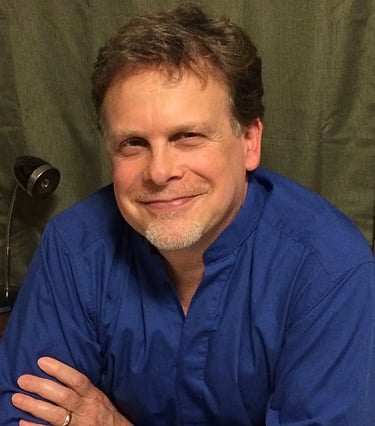
Timothy Amaral is an award-winning adult educator and teacher trainer from Salinas, CA. He specializes in the teaching and application of trauma-informed practices, social-emotional skills and needs-based responsiveness for use in the classroom, in the workplace, and in the home. He is the creator of the SELf-Led Learning model.
He has worked directly with underserved adults in a multi-level, multi-lingual academic program since 1992 where his wonderful students bring with them a broad spectrum of backgrounds and diagnoses as well as issues of addiction, complex trauma, and incarceration. He applies the principles of SELf-Led Learning in the classroom to create an extremely safe and welcoming space that has produced more than 1000 GED®, HiSET®, and high school diploma graduates. About 60% of those graduates have gone on to be Phi Beta Kappa and honors grads in college and university. Among them are engineers, nurses, physician’s assistants, bio-chemists, teachers (his own substitutes!), EMTs, police officers, loan brokers, real estate agents, a PhD cancer researcher at UCLA, debt-free home owners, really great parents, and really great parents whose own kids are now going to college.
Our Participants
"This was a great presentation that reinforced a lot of what I've been feeling about preparing for the year back to campus. I think this is something that all teachers and staff should participate in!"
--Is Your Class Healing participant
"This is the best session that I have attended. Very powerful information!"
--Emotion & Learning Moment participant
"I love the idea that I can save (at least) one student that I might have lost. I have students with whom I can use these techniques that are on the verge of disappearing."
--Healthy Classroom participant
"Thank you for reminding me to be that change agent that I once proposed myself right after college."
--SEL for Parent Educators participant
"This workshop should be required for all teachers everywhere. It would change lives."
--From Help to Hope participant
"Thank you Tim, I couldn’t have done it without you! I had so much challenging me throughout it all, and I’m glad I was still able to show up for myself. I learned so much about self love and hugging our inner child; it’s definitely put a different perspective on life for me not only in my personal growth but in the growth of my kids. They’ll get to experience a better me, and so will I."
--HSE Course Graduate